To Fix Its Airlines, Does the U.S. Need to Rethink Regulation? | Peter Coy
Coy does a medium bad job of exploring the pros and cons of airline deregulation. Best is his interchange with @Ganesh Sitaraman who has written a book on his application of +regulated competition. I think Jeff Neal's article for Harvard Law does a better job of profiling Sitaraman's analysis and arguments. Coy is more interested in @Alfred Kahn anecdotes from the godfather of airline deregulation.
Coy's final paragraphs are mealy-mouthed passive-aggressive support for the status quo, more or less saying 'they aren't making gobs of money, so how bad can it be?' But the status quo is bad for the flying public and does not serve the goals that Sitaraman points out as smart social policy, which Coy doesn't really seem very interested in. As just one example, Sitaram characterizes the period prior to deregulation: 'And over 40 years, from 1938 to 1978, this system worked pretty well. We had an increasing number of people flying. We had improvements in safety. We had the shift to the jet age. And prices were declining over this period. It was a reliable system.'
body
I was a senior in college in 1978 when I wrote my first opinion piece that touched on airline deregulation. It was an editorial in The Cornell Daily Sun (“Ithaca’s only morning newspaper”!) titled “Our Man in Washington,” and it was about Alfred Kahn, a colorful Cornell economist who presided over deregulation of airlines at the Civil Aeronautics Board from 1977 to 1978 before becoming President Jimmy Carter’s inflation czar.
I wrote, “When Kahn began hacking away at airline protectionism the airlines screamed, but today fares are lower, passenger volume is way up and airlines are actually profiting. Everybody except the small cities that no longer have nationwide air service is happy.”
“Happy” isn’t a word you hear a lot these days when it comes to airlines, except in their own advertising. People complain about high fares, unreliable service, lack of legroom and so on.[1]
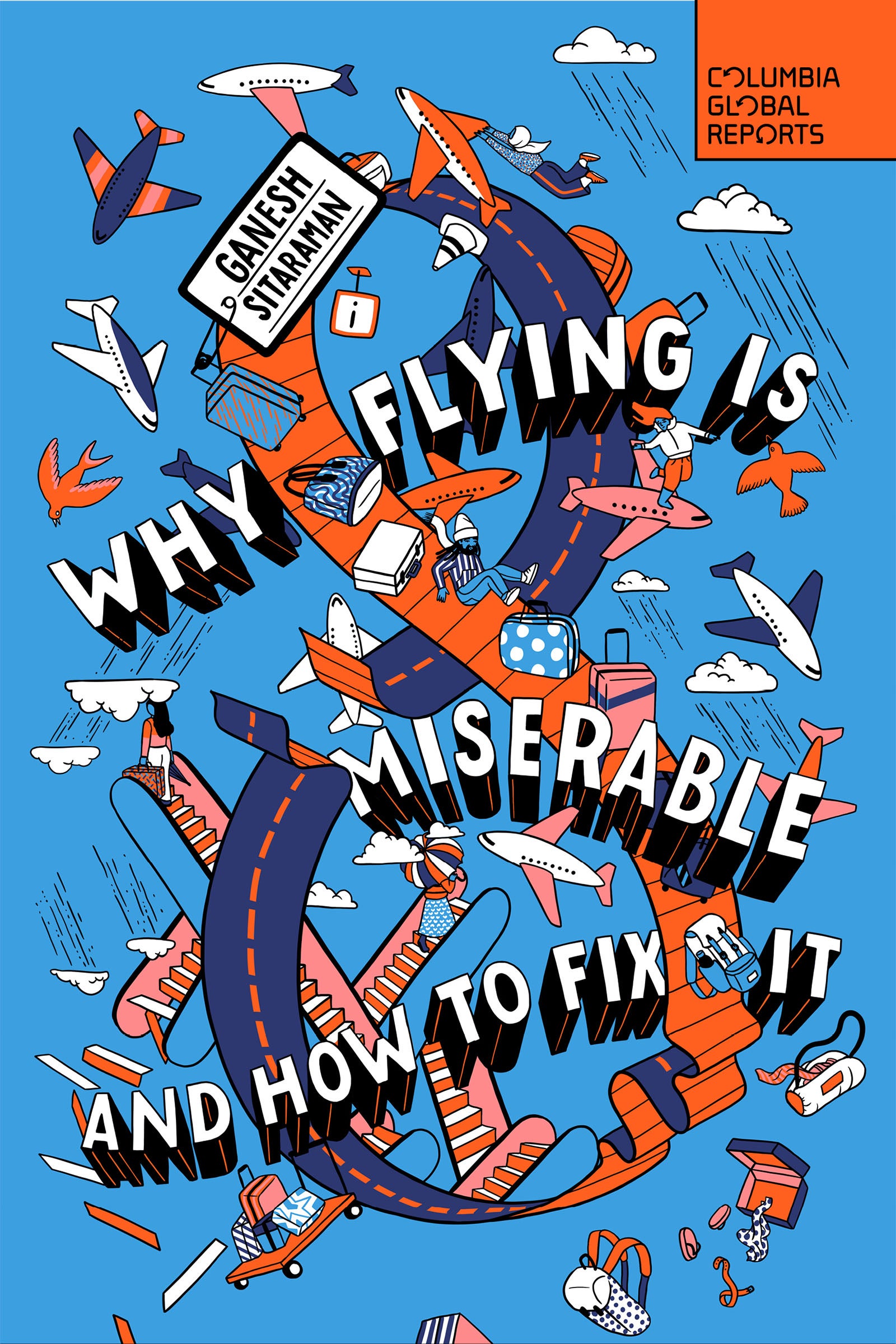
The public’s disgruntlement has created an opening for talk about some pretty extreme solutions. In a book last year, “Why Flying Is Miserable and How to Fix It,” the law professor Ganesh Sitaraman broached ideas such as replacing today’s system with a single government-run airline, or a single private carrier regulated like a public utility, or a government carrier operating alongside private ones (“the public option”).
Sitaraman, a professor at Vanderbilt Law School, has higher hopes for a more politically palatable option, “regulated competition,” which is more along the lines of what the United States had from 1938 until 1978.
This week I interviewed and exchanged emails with Sitaraman, who directs the Vanderbilt Policy Accelerator, and William McGee, a senior fellow at the American Economic Liberties Project. They gave me an early look at a white paper the two groups are presenting on Tuesday, “How to Fix Flying: A New Approach to Regulating the Airline Industry.”
For another perspective, I also interviewed Clifford Winston, a senior fellow at the Brookings Institution who is a longtime supporter of airline deregulation.
But let me first say more about Alfred Kahn, because he looms large in the stories of both supporters and foes of deregulation. Kahn had an impish side. After a Carter administration official complained in late 1978 that Kahn’s mentions of a possible depression were scaring people, he started calling depressions “bananas.” Kahn never claimed to be an expert on airlines. “I really don’t know one plane from the other,” he once quipped. “To me they are all marginal costs with wings.” But he was convinced that more competition through deregulation would lower fares for customers.
Support for airline deregulation was not a right-wing position at the time. Kahn was a Democrat. Among those calling for deregulation was Senator Edward Kennedy, the liberal Massachusetts Democrat.
Sitaraman wrote in his book that Kahn admitted that things didn’t go as well as he had hoped in some respects. That’s true. But Kahn continued to believe that deregulation was the right decision. “I certainly don’t want to have the government back in the business of trying to restructure the airline industry. That would be catastrophe,” Kahn told PBS NewsHour in 2003, seven years before his death.
Kahn might be considered bananas in today’s Washington. Both Democrats and Republicans are critical of big companies across a wide range of industries, and there’s growing support for vigorous antitrust enforcement and industrial policy. In other words, things are moving in Sitaraman’s direction. “In the midst of these big changes, remembering and reviving the American tradition of regulated capitalism should be on the table too,” he wrote in his book last year.
I’m sympathetic to Sitaraman’s point that certain industries need to be regulated because they’re natural monopolies. Competition won’t ever thrive in an industry where the bigger one company gets, the lower its costs get, increasing its advantage over rivals.[2] Or where one network gets more valuable the more people join it, starving others of customers.
The question is how closely airlines fit that description. One way to tell is to set theory to the side and look at data. Start with airfares, since lowering them was one of the main objectives of deregulation. Kahn once calculated that between 1976 and 1990, the average revenue yield per passenger-mile — an indicator of fares — fell 30 percent in inflation-adjusted terms. Fares adjusted for inflation have continued to fall since, as this chart based on government data shows.
That chart doesn’t look like a picture of failed deregulation.
It’s true that mergers have left the United States with four carriers that operate about 80 percent of domestic flights: Delta Air Lines, American Airlines, United Airlines and Southwest Airlines. On the other hand, the number of competitors per domestic route actually rose (albeit slightly) from 2000 to 2022, according to Department of Transportation data cited by Airlines for America, a trade group.
And it’s what happens on particular routes that matters. “Competition occurs at the route level, not the national level,” Winston, of Brookings, told me.
I asked Sitaraman and McGee for their responses. Sitaraman wrote that the average fare masks some routes where fares are exceptionally high, perhaps because there are no low-cost carriers competing. “So we shouldn’t just look at how things are, but also at how policy could improve things further,” he argued. McGee added that the government figures don’t include fees for checking bags, which have risen sharply, and other optional services.
Sitaraman and McGee told me that fares are only one concern for them. Another big one, they said, is that without regulation, the big carriers are free to stop serving some cities entirely. Dubuque, Iowa, and Toledo, Ohio, haven’t had a major carrier since American Airlines pulled out in 2022.
“There are a lot of values that people might care about that economists don’t have a lot to say about,” Sitaraman said. “It’s important for a large country to be stitched together.[3] It’s a value of who we are as a people, to be able to have flourishing lives in different parts of the country.”
That’s a fair point. I asked Winston about it. He said he does care about keeping America stitched together, and predicted that other carriers would respond to the opportunity to make money in Dubuque, Toledo and elsewhere.
In their joint white paper, Sitaraman and McGee offer some ideas for making air travel better for customers. I’ll cite a few: In big cities, limit any single carrier to 30 percent of the flights[4]. Require the big airlines to serve smaller markets[5]. Require “interlining,” in which airlines honor one another’s tickets if one has a problem. Ban or regulate the offshoring of heavy aircraft maintenance, which is now done in countries including China and El Salvador[6]. Mandate minimum seat sizes and protect travelers from involuntary bumping.
Winston said one risk of such regulations is that they will reduce the profitability for airlines so much that they’ll have to shrink. His list of free-market solutions includes allowing foreign airlines to fly domestic routes and building more airports and privatizing those that exist. Airports owned by investors would have a financial incentive to make improvements such as heated runways that wouldn’t need to shut down in snowstorms, he said.[7]
One thing you can’t say about airlines is that they’re raking in huge profits at the expense of customers. Warren Buffett joked in his letter to Berkshire Hathaway shareholders on 2007 that airlines have been such bad investments that “if a farsighted capitalist had been present at Kitty Hawk, he would have done his successors a huge favor by shooting Orville down.” The financial condition of the airlines hasn’t consistently improved since. McKinsey, the consulting company, wrote in 2022 that “the airline industry has failed to earn its cost of capital in every year of its existence.”
As a passenger, I’d feel safer if I felt the airlines were consistently profitable, because they would have more money to keep aviation safe. I’d also be happier if more cities were served, flights were less crowded and the economy cabin had a little more legroom. But it’s hard to see how any regulatory regime could achieve all those objectives at once.[8]
There are, as economists never tire of saying, trade-offs. In 1975, when rates were still regulated, resulting in emptier planes and higher fares, the chairman of the Federal Trade Commission, Lewis Engman, testified: “The air passenger who finds himself next to an empty seat may be pleased with this state of affairs. But I wonder how pleased he would be if he were aware that he had paid not only for the seat he was sitting in, but for the seat his briefcase was sitting in, too.”[9]
That’s a quip worthy of Fred Kahn.
more on +regulated competition:
Airline deregulation may be why flying is such a miserable part of holiday travel | Jeff Neal
- [?] •workfutures.io: Jeff Neal interviews Ganesh Sitaraman on the airline industry
Really not about holiday travel at all. Should be 'airline deregulation is why flying sucks'.
Airline travel sucks because of public policy mistakes. Various phases of the U.S. airline industry defined by different policy regimes:
- the first era (starting with the Wright Brothers), airlines were supported by air mail subsidies.
- ' in the 1930s, you get what I would call the first modern era of airline policy. It was a period of regulated competition in which Congress created a Civil Aeronautics Board, or CAB. The CAB allocated routes to different airlines to fly between different cities and it regulated the prices of those flights as well.' 'And over 40 years, from 1938 to 1978, this system worked pretty well. We had an increasing number of people flying. We had improvements in safety. We had the shift to the jet age. And prices were declining over this period.[10] It was a reliable system.' That lasted until 1978, when right-wing neoliberals deregulated airlines.
- 'The airlines moved into another phase, which I think about as a kind of Hunger Games. The 1980s were defined by cutthroat competition between the airlines. A lot of new entrants offered no frills service, had no unions[11], and took on the high-volume traffic and high traffic routes, for example. This initially meant more competition and lower prices on those routes. But the big airlines fought back and pushed out a lot of these new competitors, raised prices afterwards, and consolidated into large fortress hubs like Atlanta, Dallas, or Charlotte. By the end of the decade, after dozens of bankruptcies and mergers, labor-management strife, declining service quality, congestion, and lost baggage, there was a shakeout in the airlines that led to reconsolidation. The same big airlines that existed under regulation were still dominant, just without the checks of the regulated period. So, we moved from regulated oligopoly to unregulated oligopoly.' 'Now what we have is 'more like monopoly capitalism, a system in which there is very little competition and few choices.'
The core decision: 'One of the divides between the regulators of the 1930s and the deregulators of the 1970s was whether airlines are ordinary businesses or more like public utilities. The regulators saw airlines as public utilities. They have high capital costs. There are economies of scale and network effects. Because of these core economic dimensions, plus their role as an essential service for the public, those businesses need to be regulated differently than, say, manufacturers of sofas or coffee mugs.'
He rejects two approaches: A single nationalized airline, and a public option, with a private and a public airline, competing.
His final recommendation is to return to regulated competition. 'three principles for reforming air travel. The first is no flyover country. I think we shouldn’t have an airline system that doesn’t serve large parts of the country, including smaller and midsize cities. The second principle is no bailouts, no bankruptcies. We want a stable airline business, one that isn’t sometimes going through boom years, and other times needing taxpayer bailouts. We want airlines to be reliable all the time. And then third is fair and transparent prices. Over the last few decades, we’ve seen pricing get more and more complicated with increasing numbers of fares and classes of fares, in addition to all the junk fees and additional prices and costs that are added to tickets now. I think passengers need a much simpler system that’s easier for people to understand, easier for people to navigate, and fair for them in the process.'
Efficiencies were accumulating through technology and process improvements, not market leverage.
body
The upcoming holiday travel season promises to be one of the busiest on record, with more passengers and luggage squeezing cheek-by-jowl into fewer airplanes, at higher prices, with smaller seats, and worse service than ever before. Not surprisingly, fewer travelers relish the idea of heading to the airport. According to the market research firm, J.D. Power, customer satisfaction has dropped each of the last two years since the pandemic, driven in large part by “soaring demand, limited supply and surging airfares,” which have nonetheless led to a “golden age of enhanced revenues” for airlines.
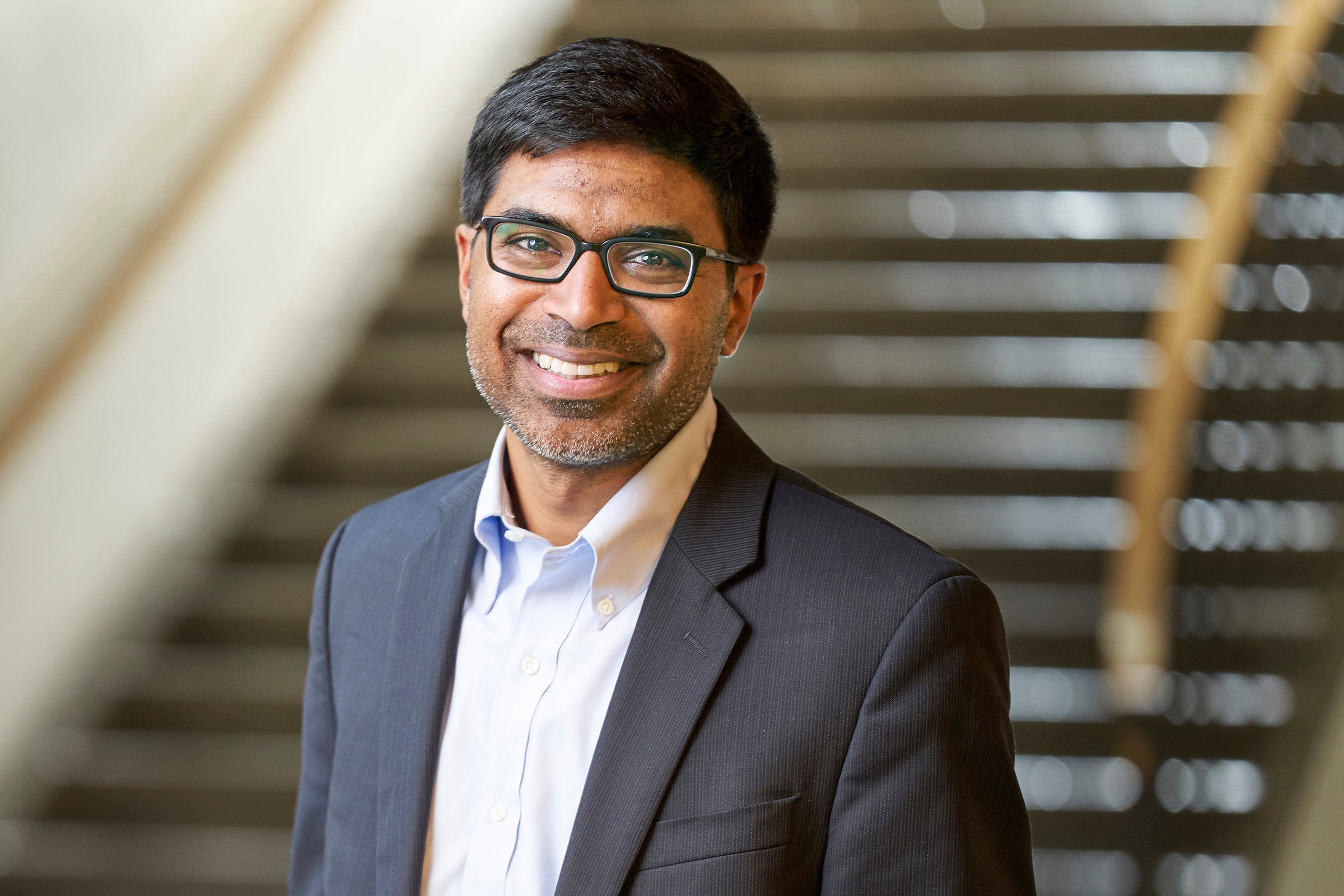
Harvard Law Today recently spoke to Harvard Law School graduate and Vanderbilt Law Professor Ganesh Sitaraman ’08[12] about why air travel has become so challenging. In his new book, “Why Flying Is Miserable and How to Fix It,” Sitaraman traces the history of the U.S. airline industry from its inception until today, argues that the problems plaguing air travel today stem from the 1978 decision to deregulate the industry, and proposes a series of reforms he believes would help stop the slide.
Harvard Law Today: Your book is titled, “Why Flying is Miserable, and How to Fix It.” Let’s start with the first half of that. From the 35,000 foot in the air perspective, ==why is flying so miserable?==
Ganesh Sitaraman: Two words: public policy. All the things that are a problem with flying are a function of public policy choices. We decide as a country that we want children’s toys to be safe, that we want rural places to have electricity service, that we think banks should be able to function reliably. These are public policy choices to regulate or set up systems that advance goals we have as a country. When we have failures in these systems, it’s a function of getting the policies wrong. What I found in doing the research for the book is that everything about what makes flying miserable today is a function of one big public policy choice: the choice to deregulate the airlines in 1978.
HLT: ==In what ways has flying become more miserable?==
Sitaraman: For passengers, the list is long: smaller seats, additional fees for luggage or for picking your seat, delays, cancellations, having to connect through Atlanta or Dallas. These are the little irritations of flying that we’ve increasingly had to suffer through over the years. For the industry, and I can’t help myself, there has been a lot of turbulence. The industry is in a boom-and-bust cycle in which it makes tons of money, and then, when there’s a demand shock, like 9/11 or COVID, it needs a taxpayer bailout or support program.[13] The industry also has much less competition than it’s had in the past, and many cities have seen reductions in service. Some have even lost all major carrier service. This is not a healthy way to run an airline system.
HLT: ==In the book, you framed deregulation as one of several phases of airline history. Can you sketch that history out a bit, and the role government played in each?==
Sitaraman: The first era, from the Wright Brothers until the 1930s, involved a lot of public support, largely in the form of Air Mail subsidies. Then in the 1930s, you get what I would call the first modern era of airline policy. It was a period of regulated competition in which Congress created a Civil Aeronautics Board, or CAB. The CAB allocated routes to different airlines to fly between different cities and it regulated the prices of those flights as well. They did this to ensure that there would be geographic access to lots of different parts of the country. So, places that are low volume, smaller, and more remote would still get service. The Civil Aeronautics Board also tried to make sure there was a measure of competition — not so much that the airlines would go bankrupt, and not so little that there would be monopolies. They were really trying to hit that Goldilocks balance. And over 40 years, from 1938 to 1978, this system worked pretty well. We had an increasing number of people flying. We had improvements in safety. We had the shift to the jet age. And prices were declining over this period.[14] It was a reliable system.
Then in the 1970s, a number of advocates started pushing for deregulation. Their view was that the system that the Civil Aeronautics Board organized was more like a government-run cartel, and that market competition would be better.[15] To be fair, they had a good pitch: imagine if you had dozens of airlines, operating competitively, with lower prices, and no real downsides. That would be a better system, they said. That[16] vision persuaded Congress to deregulate the industry in 1978. But ultimately, we didn’t end up in the dream-world of the deregulators.
HLT: ==So, what happened after the industry was deregulated?==
The airlines moved into another phase, which I think about as a kind of Hunger Games. The 1980s were defined by cutthroat competition between the airlines. A lot of new entrants offered no frills service, had no unions[17], and took on the high-volume traffic and high traffic routes, for example. This initially meant more competition and lower prices on those routes. But the big airlines fought back and pushed out a lot of these new competitors, raised prices afterwards, and consolidated into large fortress hubs like Atlanta, Dallas, or Charlotte. By the end of the decade, after dozens of bankruptcies and mergers, labor-management strife, declining service quality, congestion, and lost baggage, there was a shakeout in the airlines that led to reconsolidation. The same big airlines that existed under regulation were still dominant, just without the checks of the regulated period. So, we moved from regulated oligopoly to unregulated oligopoly.[18]
Where we’ve been over the last few decades is what I would consider another phase in our history of airlines, which is more like monopoly capitalism, a system in which there is very little competition and few choices. Often the prices aren’t that great. Sometimes the service isn’t that great either. And there’s not much you can do about it, because this is an essential service that you need to get from place to place.
HLT: Turning to some of the reform proposals, I was struck by how a few of them reminded me of the health care reform debate. You write, for instance, about nationalization and about a public option. Can you talk a little bit about those and what advantages they might offer?
Sitaraman: One of the divides between the regulators of the 1930s and the deregulators of the 1970s was whether airlines are ordinary businesses or more like public utilities. The regulators saw airlines as public utilities. They have high capital costs. There are economies of scale and network effects. Because of these core economic dimensions, plus their role as an essential service for the public, those businesses need to be regulated differently than, say, manufacturers of sofas or coffee mugs.
The policy ideas I talked about in the book all take very seriously that the underlying economic dynamics of airlines are different from other businesses. If you really take them to the extremes, the most efficient approach would be to maximize network size and economies of scale. The most concentrated system you could have would be a single airline, providing a network that is totally unified across the country, where you were always flying the same airline, and you never had to worry about where to buy your tickets. But a single airline, whether public or private, does have some downsides. When you have a monopoly provider, there’s literally no competition, and so you might be worried that you won’t see innovation, and that it will become sclerotic.
HLT: ==How about some sort of public option?==
Sitaraman: A public option adds a little bit of competition — and this is the approach Australia had before it deregulated airlines. Under a two-airline policy, there would be a private airline and a public airline. They’d fly to the same places with some similar terms, but would compete otherwise. The idea is that the private competitor will ensure that the public service is of good quality. And the public competitor will ensure that the private actor doesn’t raises prices too high. But this would be a real departure from where we are right now in our airline industry. In the book, I explore these options to expand our sense of how airline policy could work. But then spend most of the time on ways to create a system of regulated competition that preserves more of the system we have, while trying to make it better.
HLT: And ==what would regulated capitalism look like for air travel?==
Sitaraman: In the book, I outline three principles for reforming air travel. The first is no flyover country. I think we shouldn’t have an airline system that doesn’t serve large parts of the country, including smaller and midsize cities. The second principle is no bailouts, no bankruptcies. We want a stable airline business, one that isn’t sometimes going through boom years, and other times needing taxpayer bailouts. We want airlines to be reliable all the time. And then third is fair and transparent prices. Over the last few decades, we’ve seen pricing get more and more complicated with increasing numbers of fares and classes of fares, in addition to all the junk fees and additional prices and costs that are added to tickets now. I think passengers need a much simpler system that’s easier for people to understand, easier for people to navigate, and fair for them in the process.
HLT: ==It seems like fixing the airline system would be something that everybody could get behind. How would you respond to people who argue that more government bureaucracy and red tape might make things worse, and that returning to any kind of regulated system is a mistake?==
Sitaraman: The first thing I would say is that we’ve now lived in the deregulated system for 40 years. And what we ended up with was a system that failed to achieve the things that the deregulators said it would. We now have a system that is less competitive than it was even during regulation. The top four airlines collectively have a larger market share now than the top four airlines did in 1977. Specific airlines at airports have a larger market share than they did in the 1970s. Delta, for example, had about 21% in Detroit in the 1970s; now it has more than 70% in Detroit. This system of markets and competition has led to massive consolidation and concentration. And concentration also means higher prices and fewer options. And in the case of geography, less airline access to lots of different communities is a real problem for economic growth and opportunity. To exclude big chunks of the country is a real mistake.
HLT: ==If everyone dislikes flying so much, why haven’t we reformed the system before now?==
Sitaraman: I think there are two reasons why we haven’t gotten airline reforms at the kind of scale that I talk about in the book. The first reason is ideological. For about 40 years, we’ve had this view that airline deregulation was great, that everything about it worked well, and that the system beforehand was terrible. And part of what I think we’re seeing now in a whole range of areas, whether that’s trade and globalization, or industrial policy and manufacturing, or antitrust, or tax policy, is a questioning of whether the ideological views that in many cases were held by both liberals and conservatives over the last 40 years went too far. People are now thinking more capaciously about economic policy, rather than just assuming that deregulation, privatization, austerity, and globalization are the right strategies for solving virtually all policy problems.
The second thing is that passengers are a diffuse group of people, whereas the airline industry is really concentrated. Passengers don’t have lobbying firms that can deploy in Washington. But airlines do. So the balance of power is in the direction of the airline industry which can push to prevent regulation.[19]
My hope is that the book contributes to moving beyond the neoliberal view of deregulation or non-regulation as a default way in thinking about economic policy, and that instead, we begin to recognize that public policy shapes markets, and that we can shape the market in ways that we want and that will make them work better. There will be another moment when there’s time for a big reform, like the COVID situation. And in that crisis moment when the airlines need billions of dollars from taxpayers, my hope is that people will be ready to change direction — and ask for real reforms to how this industry works.[20]
So he was wrong in 1978, and we should reimpose greater +regulation? Yes. ↩︎
Hold on… aren't economies of scale latent in almost every business and market? By this logic, Amazon should be broken up, the railroads should be nationalized, and super market chains should be made illegal. ↩︎
Something economists don't examine. ↩︎
Controlling scale effects. ↩︎
Putting a value on 'stitching the country together'. ↩︎
Why? Indistrial policy? Unionization? ↩︎
A free market idiot. ↩︎
Except to view airlines as a public good, like roads, bridges, the postal service, and schools. At the very least, up the requirements for airlines to do good, rather than make money, like common carrier regulations for freight. ↩︎
Peter Coy is a closet neoliberal, I guess. ↩︎
Efficiencies were accumulating through technology and process improvements, not market leverage. ↩︎
+gig economy: low-pay, no benefits, no long-termism. ↩︎
Unmentioned in the Peter Coy piece. ↩︎
Efficiencies were accumulating through technology and process improvements, not market leverage. ↩︎
Despite the fact that prices were dropping, and public policy benefits were being achieved? ↩︎
Starry-eyed ↩︎
Gig economy: low-pay, no benefits, no long-termism. ↩︎
'By the end of the decade, after dozens of bankruptcies and mergers, labor-management strife, declining service quality, congestion, and lost baggage, there was a shakeout in the airlines that led to reconsolidation. The same big airlines that existed under regulation were still dominant, just without the checks of the regulated period. So, we moved from regulated oligopoly to unregulated oligopoly.' ↩︎
Asymmetric power between the public and the airlines. ↩︎
Or now. ↩︎